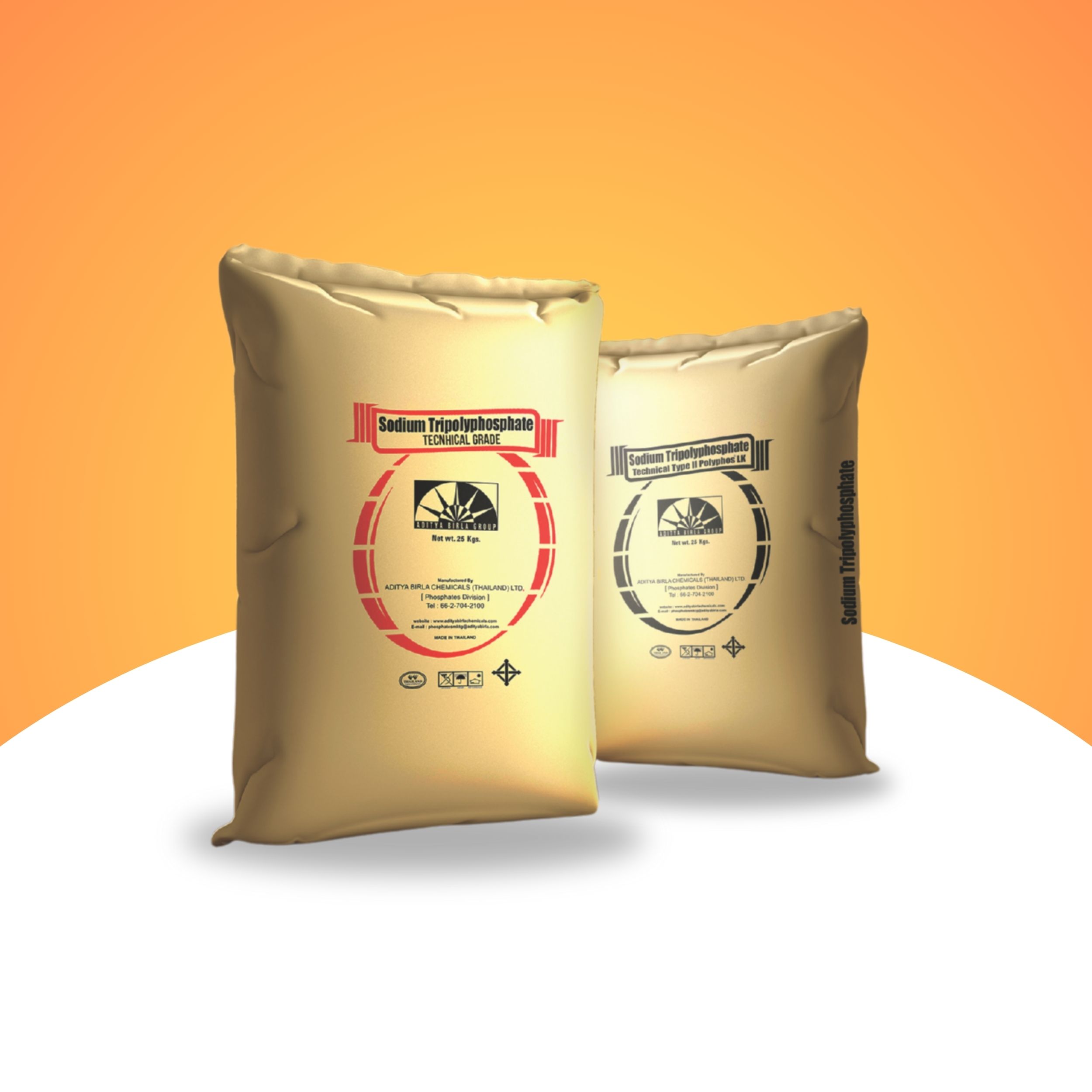
STPP - Sodium Tripolyphosphate
Sourced from: Developed with Aditya Birla Chemicals Thailand
Purpose
To act as a highly efficient dispersant in ceramic glaze, ensuring controlled deflocculation, smooth flow, uniform suspension stability, and consistent application. This special grade has been co-developed precisely for ceramic glaze requirements where accuracy matters.
How to Use
Add STPP during the glaze preparation stage, preferably when hydrating raw materials. Typical dosage varies based on glaze composition; adjust gradually until optimal viscosity and flow are achieved. Avoid over-addition to prevent over-deflocculation and settling.
Benefits
Superior dispersion leading to smooth, defect-free glaze. Improved grinding efficiency and reduced milling time. Stable viscosity and better control at application. Cleaner surface finish with consistent firing results. Engineered specifically for ceramic glaze — predictable, repeatable performance batch after batch.
STPP supplier for ceramic glaze in India
Rajiv Cera supplies sodium tripolyphosphate (STPP) for ceramic glaze preparation. STPP acts as a dispersant to help control deflocculation, slurry flow and suspension. This catalog offering is intended for ceramic-glaze applications; choose the grade against your formulation and confirm suitability through application trials.
Packaging, dispatch and supply
- Packaging
- 25 kg bags
- Delivery coverage
- Delivery across India. Export is also possible; discuss your destination and shipment requirements with the team.
- Stock
- Usually available. Confirm current stock when ordering.
- Dispatch lead time
- 3–5 days for dispatch. This is not delivery time; transit time varies by destination.
- Trial samples
- Small trial samples can be provided. Contact the team with your application and sample requirements.
Application and grade selection
In glaze preparation, evaluate STPP by its effect on viscosity, flow and settling in your own slurry. Add it gradually during preparation and monitor the result. Over-addition can cause over-deflocculation, so the correct dosage depends on the glaze formulation rather than a universal percentage.
What to include in your sourcing enquiry
- Glaze composition, process and current dispersion problem
- Required technical data sheet and safety data sheet
- Grade specifications and batch certificate of analysis requirements
- Trial quantity, order quantity, packaging and delivery destination
Request grade-specific documents and confirm their availability. Check specifications, current stock and shipment details for the material being quoted.
Common sourcing questions
- What is STPP used for in ceramic glaze?
- Sodium tripolyphosphate is used as a dispersant in ceramic glaze preparation. It helps control deflocculation and slurry flow; performance depends on the raw materials, water and formulation.
- Can I enquire about STPP supply in Gujarat?
- For sourcing enquiries from Gujarat, including Morbi, Ahmedabad, Rajkot and Surendranagar, contact Rajiv Cera with your application, quantity and delivery location. Confirm grade availability, packaging, lead time and commercial terms with the team before ordering.
- Is every STPP grade suitable for ceramic glaze?
- No. Match the grade to the intended application and request the relevant specifications. This page describes Rajiv Cera's ceramic-glaze offering, not an assurance of suitability for food, detergent or other uses.
- How much STPP should I add to a glaze?
- There is no single dosage for all glaze recipes. Add gradually during preparation, measure viscosity and flow, and check suspension stability before scaling up.
- What is the packaging, and can I request a trial sample?
- The standard packaging is 25 kg bags. Small trial samples can be provided; contact Rajiv Cera with your application and sample requirements.
- What is the dispatch lead time?
- The dispatch lead time is 3–5 days. This refers to dispatch, not delivery; transit time varies by destination. Stock is usually available, but confirm current availability when ordering.
- Do you deliver across India and support exports?
- Rajiv Cera delivers across India, and export is also possible. Share the destination and shipment requirements with the team to discuss arrangements.